
BENEFITS PACKAGE
AbiGov is a low-code platform designed for organizational process management
The system is intended for modeling, managing, optimizing, and continuously improving business processes, as well as conducting process simulations based on data from other systems
Platform History
Currently, through collaboration with municipal and city offices across Poland, we are expanding this tool with additional functionalities.
The system is designed for process-based organizational management, utilizing advanced process diagram/modeler functions in BPMN 2.0 standard, and for managing requests from office employees who have access to the system to create new processes and/or improve existing internal processes.
The analytics and statistics module allows monitoring parameters such as:
 Intensity
Variability
Frequency
Effectiveness
Intensity
Productivity within ongoing processes
System Description
The system is designed, in particular, for full control of internal organizational processes by enabling:
Transparency and Process Improvement within the Organization
The primary beneficiary of the project is the team responsible for the day-to-day proper execution of activities within established processes, their analysis, and continuous improvement.
An important aspect is full transparency of processes available to organizational employees. Those responsible for their execution can not only better understand the processes being carried out, but also propose their own changes to a selected process using the fully implemented change management mechanism.
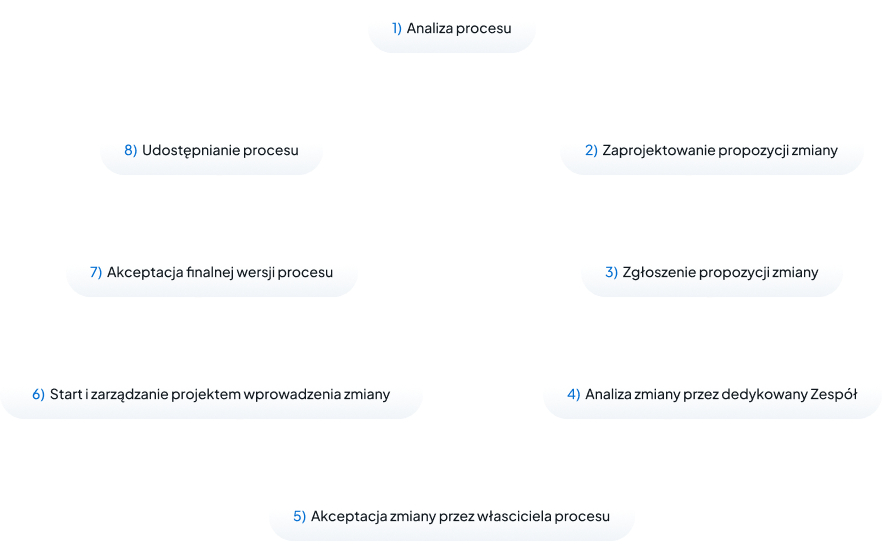
This is done by modeling the change to the relevant process based on an internal request created in the system. For this purpose, a dedicated project team analyzes the request, reviewing and evaluating it internally. Finally, after proper approvals and validations, the process improvement team implements the process changes by creating a detailed project aimed at implementing the new solution.
The entire system is built on a widely developed permissions framework
The SZP system is a domain-specific solution for process design – this means that other systems and workflow applications, where work processes take place, can base their operations on SZP.
AbiGOV is a domain-specific
solution for process design
This means that other systems and workflow applications, where work processes take place, can rely on SZP for their operations.
Example of process improvement implementation in SZP:
STANDARDIZATION AND SHARING FROM A SINGLE LEVEL
AbiGOV – Service Catalog
The Service Catalog is a set of tools that, in particular, allows standardizing and sharing with external systems all necessary information about services carried out within the organization. Among other things, the system enables:
Creating extended service descriptions similar to those in the Public Information Bulletin (BIP)
Sharing forms with external services
Designing all necessary forms, including their workflow, required to collect information from applicants needed to register requests, e.g., creating forms with the required data to register an application for a new ID card.
AbiGov Features
Organizational Structure
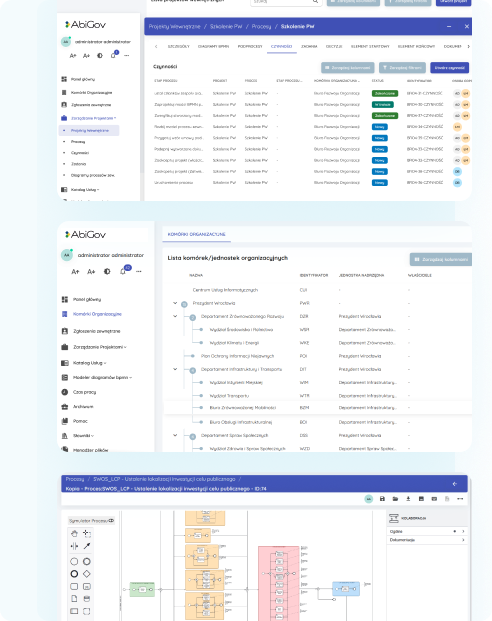
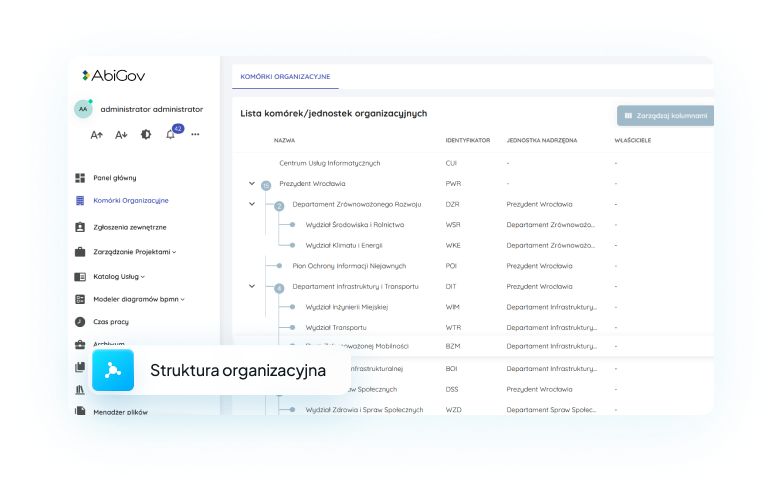
The organizational structure is a key element of the system due to permissions and access rights depending on this structure. Here, fully formalized and officially presented information about the organizational structure of the office is provided in the form of a multi-level tree.
Additionally, the SZP system serves as a reference and is a domain-specific system regarding the office’s organizational structure for other systems. Any system implemented in the organization that requires information about the office’s structure can connect to the SZP system and retrieve this data.
Project Management
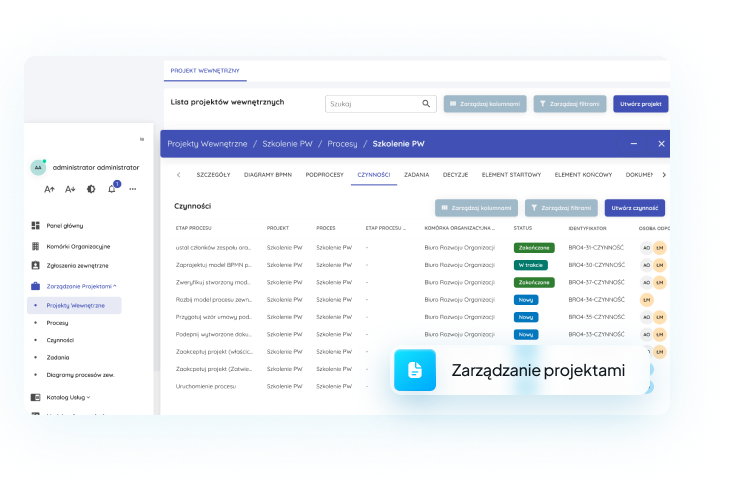
In this module, projects are created in which office employees (system users) plan and carry out tasks related to creating and describing services, as well as developing internal processes that are later shared with other domain-specific systems.
Examples include SWOS-type processes (Case Support System) or processes carried out internally within the organization – e.g., delegation handling, leave request processes, procurement processes, etc.
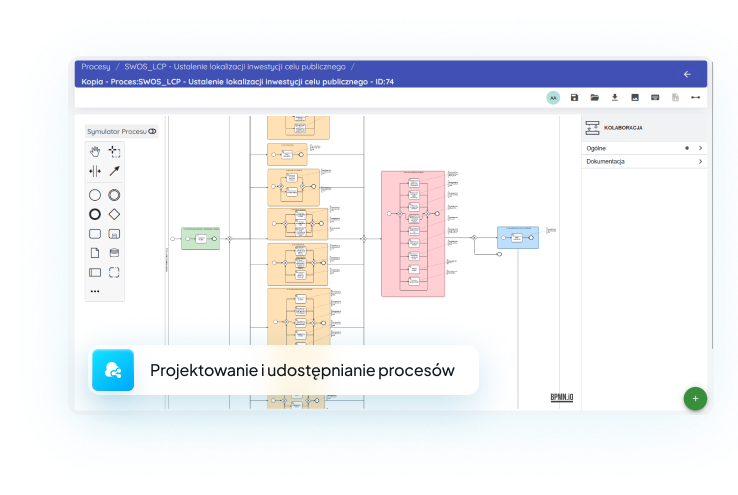
Designing and Sharing Processes
Projects are carried out in two phases: Internal projects include a management process in which tasks and work to be completed are planned, aimed at developing an external process (e.g., a process within SWOS).
The management process can be linked to the service catalog – to a specific service or service description.
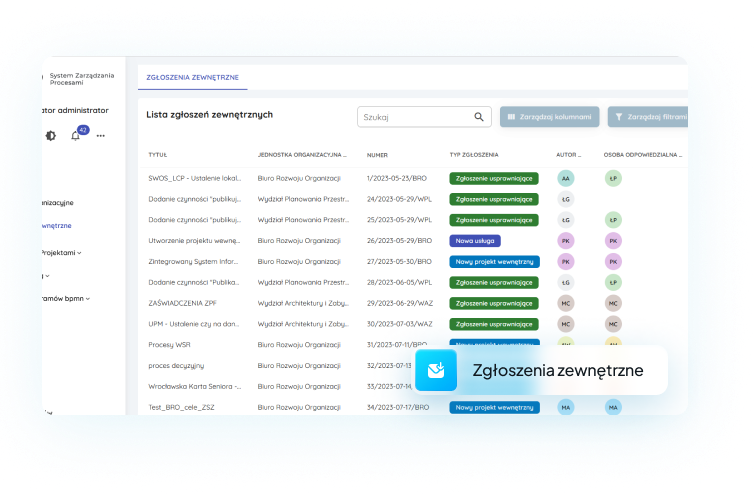
External Requests
Everything begins with an external request. Registering the request initiates the procedure for introducing a new service or project to be carried out in other systems within the organization or for modifying existing ones.
It also allows entering and reviewing proposed changes within existing and active processes. Every employee can view processes carried out in their department and has all the necessary tools to describe them in detail...
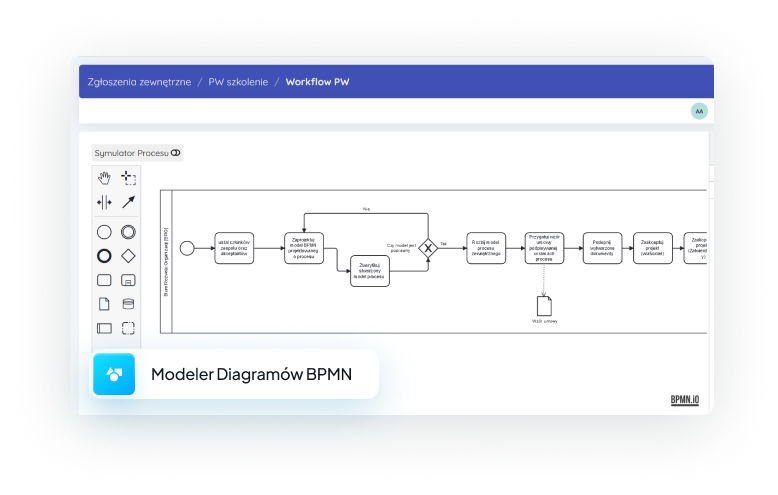
BPMN Diagram Modeler
This is a tool for graphically designing management processes, daily work planning, as well as processes that will be executed in other systems.
The BPMN diagram modeler is also used for creating form workflows and descriptions for the service catalog.
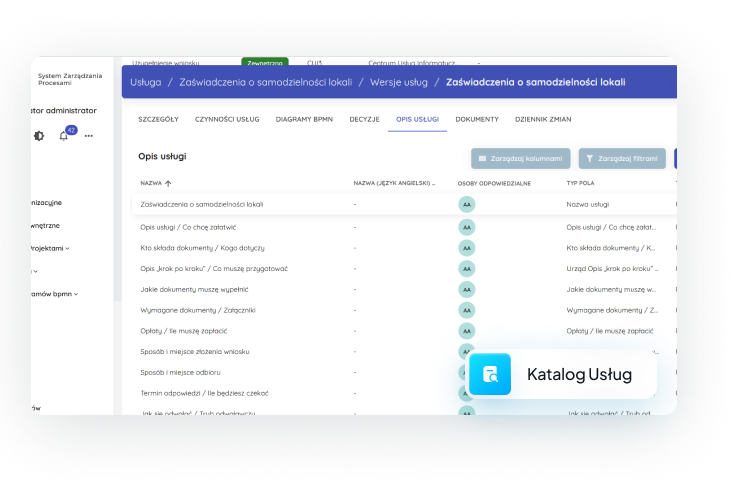
Service Catalog
It allows users to catalog and fully describe both internal services—such as those related to business travel—and external services—those provided in connection with specific cases. The service catalog serves as a repository of service descriptions that users can consult whenever they need specific information.
The service catalog is also a place where descriptions and forms are made available externally to other systems, e.g., for the Public Information Bulletin (BIP).
Statistics and Analyses
One of the key SZP functionalities is process statistics and analyses. The system collects real-time data from the execution of individual tasks within designed processes and generates various statistics, including:
- General statistics
- Efficiency statistics
- Intensity statistics
- Productivity statistics
- Process statistics
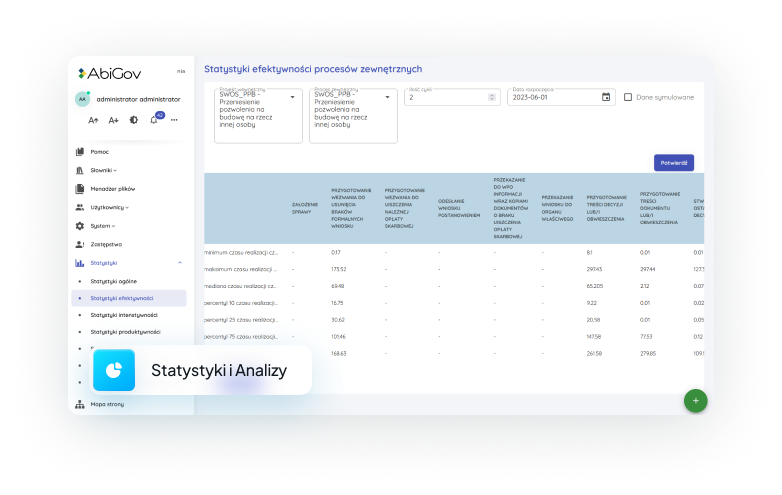
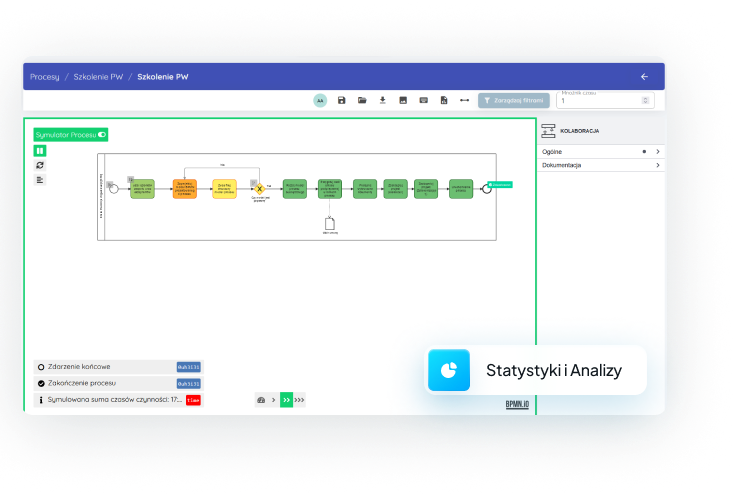
Based on data collected within SZP as well as external data, quick graphical bottleneck analysis is also possible, allowing rapid identification of issues within designed processes.
The SZP system allows generating statistics. Collected data are analyzed to measure process efficiency, frequency, intensity, and productivity.
Did you like our tool?
Other important AbiGov features that facilitate work include:
Dashboard
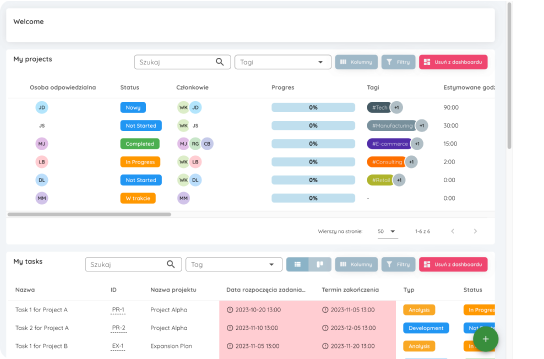
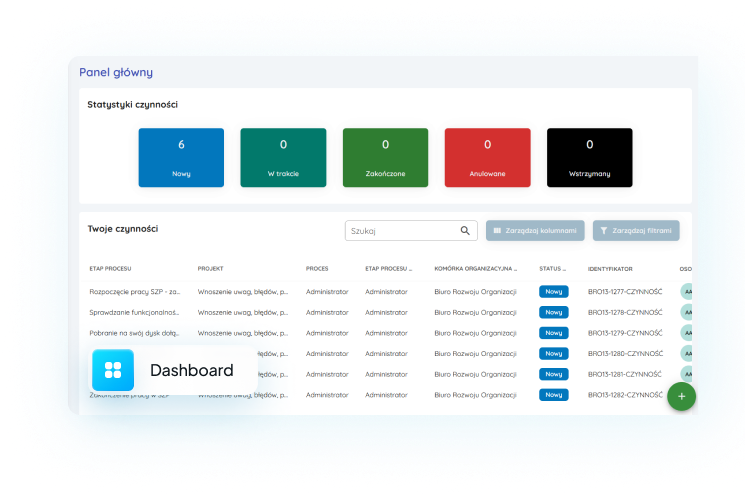
An advanced dashboard where employees can quickly and easily check the tasks they need to complete within processes.
The Main Panel displays statistics of key tasks within management processes, divided into New, In Progress, Completed, On Hold, and Cancelled. These are specific tasks each person needs to complete that day.
Column Management
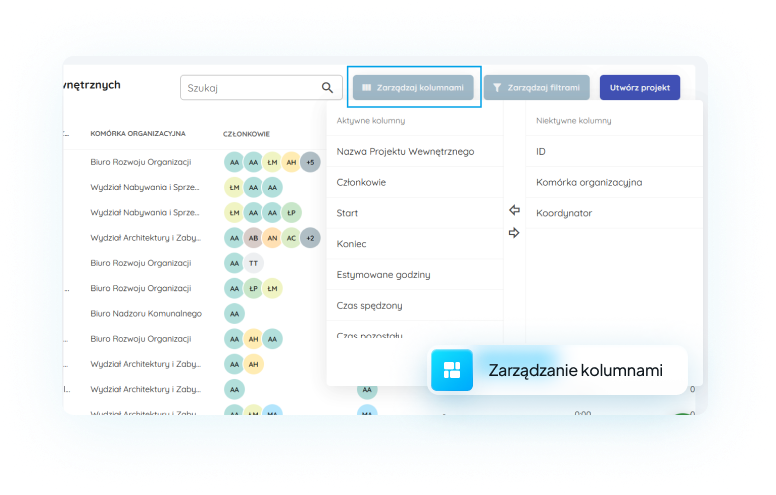
Convenient column layout management allows users to customize views and display only the necessary information. This functionality applies to the entire system and allows configuration of all data displayed in table format.
Filtering
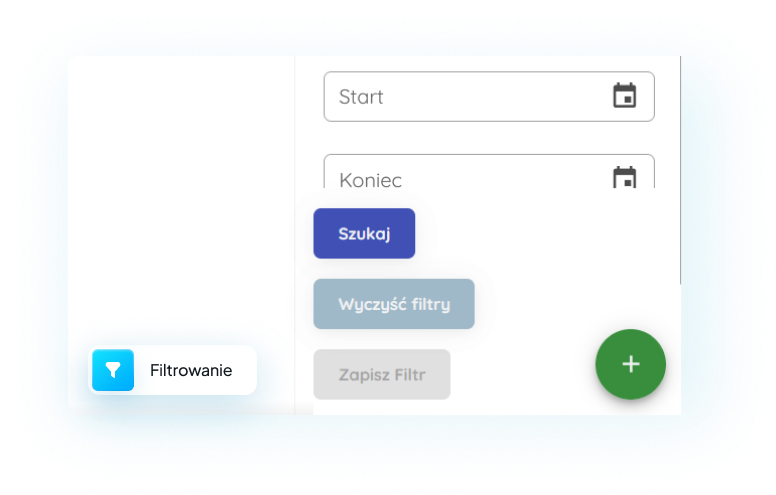
SZP enables searching the entire system by multiple parameters and allows users to create and save filter templates, significantly simplifying and speeding up daily work in the system.
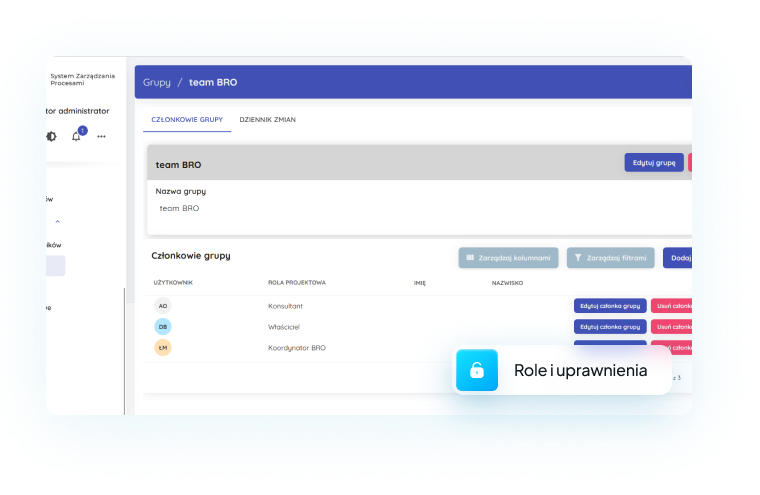
Roles and Permissions
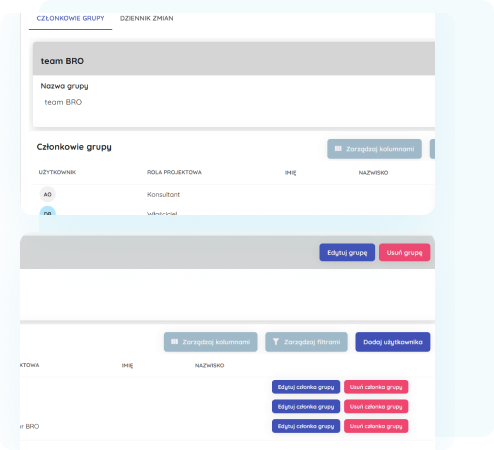
The system provides very broad, almost unlimited management of permissions, roles, and access, both within individual user profiles and entire user groups.
Each module has a broadly defined range of permissions. Multiple roles can be assigned to each employee across the system. Each employee can have different roles within different projects. The system also allows the creation of groups...
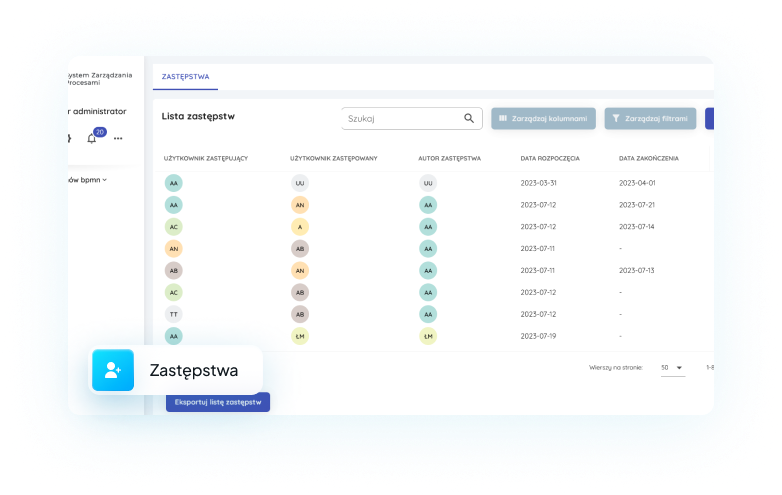
Substitutions
To maintain operational continuity, the SZP system includes a substitution mechanism, which allows all planned tasks to be transferred to another person acting as a deputy in case the employee responsible for those tasks is absent. Substitutions are always time-bound, and only during the specified period can the substitute take over the duties of the absent employee.
Continuous growth
At Abiflow, we are not slowing down. We are constantly improving existing and working on new functionalities of our system.
As part of your subscription, we provide periodic updates to AbiFlow.

