Discover areas where we have expertise
You will find descriptions of solutions that demonstrate our competencies
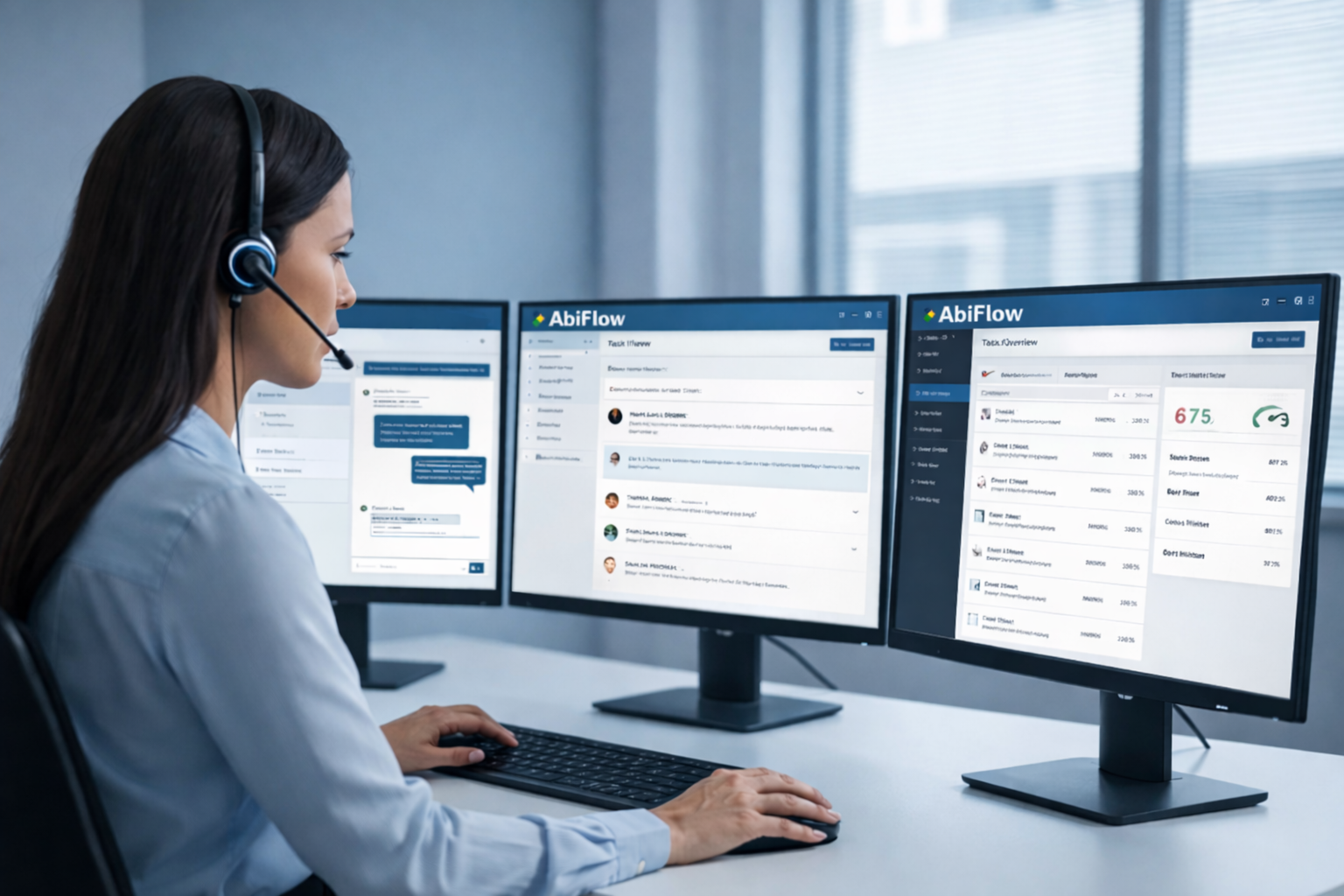
1. Business Needs Assessment, Process Audit, and Pre-Implementation Analysis
We support organizations in making informed project decisions by providing reliable analyses and recommendations based on practical implementation experience. We combine methodological knowledge with experience gained from projects across various industries to identify optimal directions for change and prepare a solid foundation for the implementation of technological or organizational solutions.
Scope of services:
Business Analysis – identification of business needs and goals, stakeholder mapping, definition of functional and non-functional requirements, process modeling (AS-IS/TO-BE), identification of risks and success metrics.
Process Audit – review and evaluation of existing processes in terms of efficiency, compliance, and optimization potential; identification of bottlenecks, improvement recommendations, and a corrective action plan.
Pre-Implementation Analysis – preparing the organization for implementation: clarifying scope, solution architecture, schedule, and costs; selecting the project methodology; preparing project documentation and an implementation plan.
Client Outcomes:
-
clearly defined project requirements and objectives
-
documented processes and optimization recommendations
-
reduced risks and implementation costs
-
cohesive documentation serving as the basis for project execution
We conduct work according to an appropriately selected methodology and always complete it with comprehensive documentation. The analytical phase is treated as an integral part of a successful implementation.

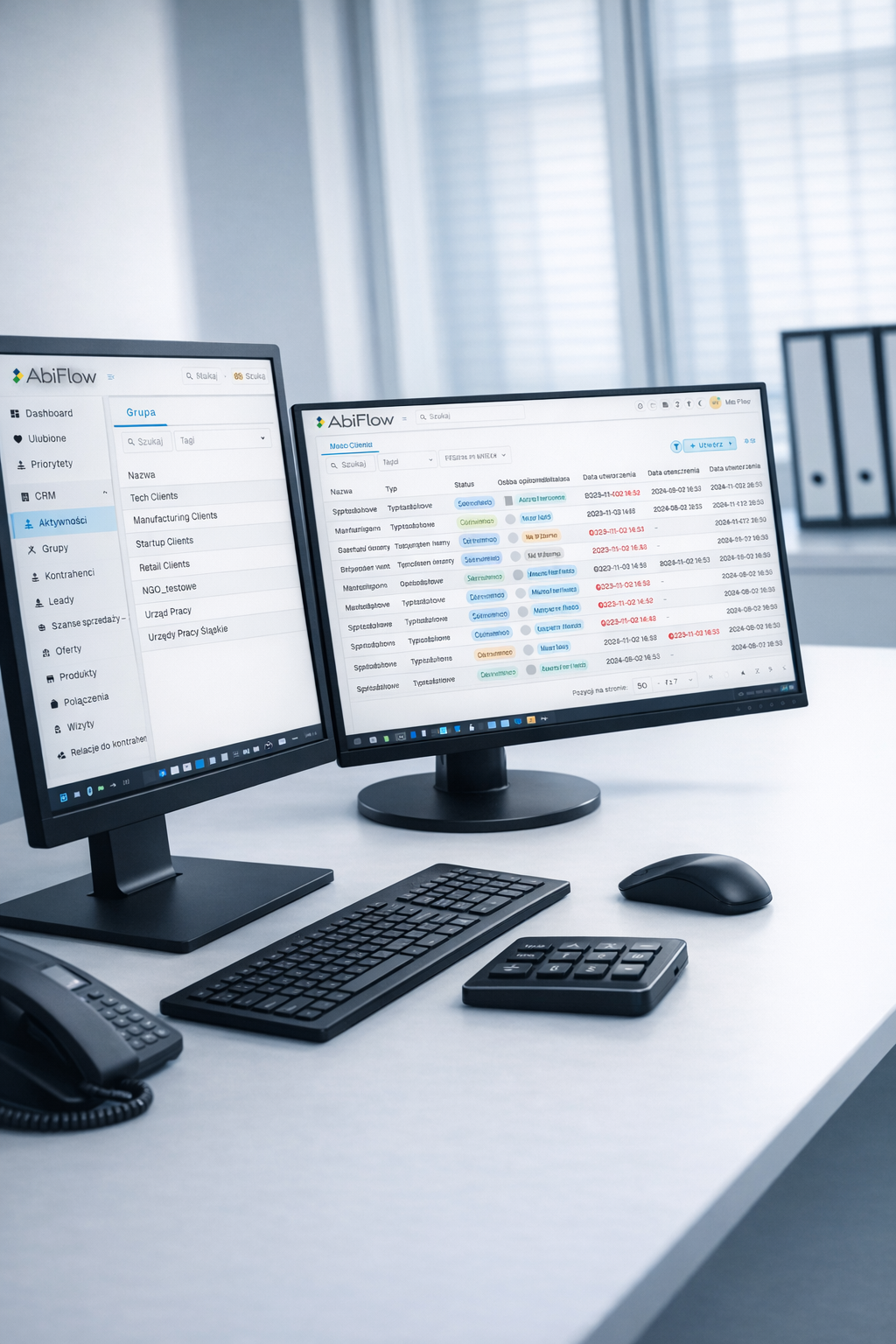
2. Dedicated CRM System – AbiFlow
We design and implement dedicated CRM systems tailored to the specific characteristics of an organization, its processes, and its customer relationship model. We create solutions that not only organize data and automate sales activities but, most importantly, support real business processes and drive company growth.
We create CRM systems based on a detailed analysis of needs, which allows us to adapt the tool to the organizational structure, the customer lifecycle, and the individual work scenarios of teams. The platform can be fully integrated with the organization’s operational processes, ensuring data consistency and a smooth flow of information between departments, enabling customer service in a 360° model with particular emphasis on planned activities, actions, lead acquisition, execution of sales opportunity stages, creation of a product database, and offer preparation.
Scope of Implementation Includes:
-
pre-implementation analysis and modeling of customer service processes,
-
customization of the system to meet organizational needs,
-
expansion of CRM modules (sales, customer service, support, tickets, and others) with additional functionalities.
-
configuration of workflows and automation of activities,
-
creation of forms, registers, and data structures,
-
customization of reports and analytics to support business decision-making.
-
integration with financial and accounting systems, banking platforms, Active Directory, and other corporate solutions,
-
post-implementation support and further system development.
AbiFlow CRM solutions are built using a flexible Low-Code platform, enabling rapid adaptation of functionalities to evolving business needs without extensive programming work.
The result is a scalable, secure, and fully customized tool for managing customer relationships, supporting operational efficiency, and ensuring transparency of organizational activities.
3. Project Management
The project management module in AbiFlow provides a unified environment for planning, executing, and monitoring projects and tasks within an organization. It integrates information about clients, projects, tasks, and resources into a single system, enabling full control over work progress, costs, and team responsibilities.
The system helps organizations maintain transparency in project processes, improve work efficiency, and ensure a high level of control over achieving business objectives.
Key Features:
Centralized Project Information
All data related to projects, tasks, sub-tasks, documents, and clients is available in one place, enabling quick access and real-time progress tracking.
Effective Time and Resource Management
The module allows time tracking, access to project documentation, and real-time billing with clients. This ensures precise resource planning and control over operational costs.
Advanced Task Management
Tasks can be assigned to specific team members, with priorities defined and progress indicators monitored in real time. Each task has clearly defined responsibilities and a complete activity history.
Team Collaboration and Communication
Adding observers, notes, and comments to tasks facilitates information flow and coordination. Automatic notifications inform users of status changes, deadlines, and new activities.
Security and Access Control
The system uses a role-based permissions model and project structure, ensuring data access is limited to authorized users.
Organizational Benefits:
-
transparency in project and task execution
-
effective management of time and costs
-
clear division of team responsibilities
-
improved collaboration and project communication
-
enhanced control over deadlines and quality
The AbiFlow project management module helps organizations achieve higher operational efficiency, better work organization, and effective project execution, translating into improved client service and tangible business benefits.

Digitalization begins with strategy – invest in pre-implementation analysis
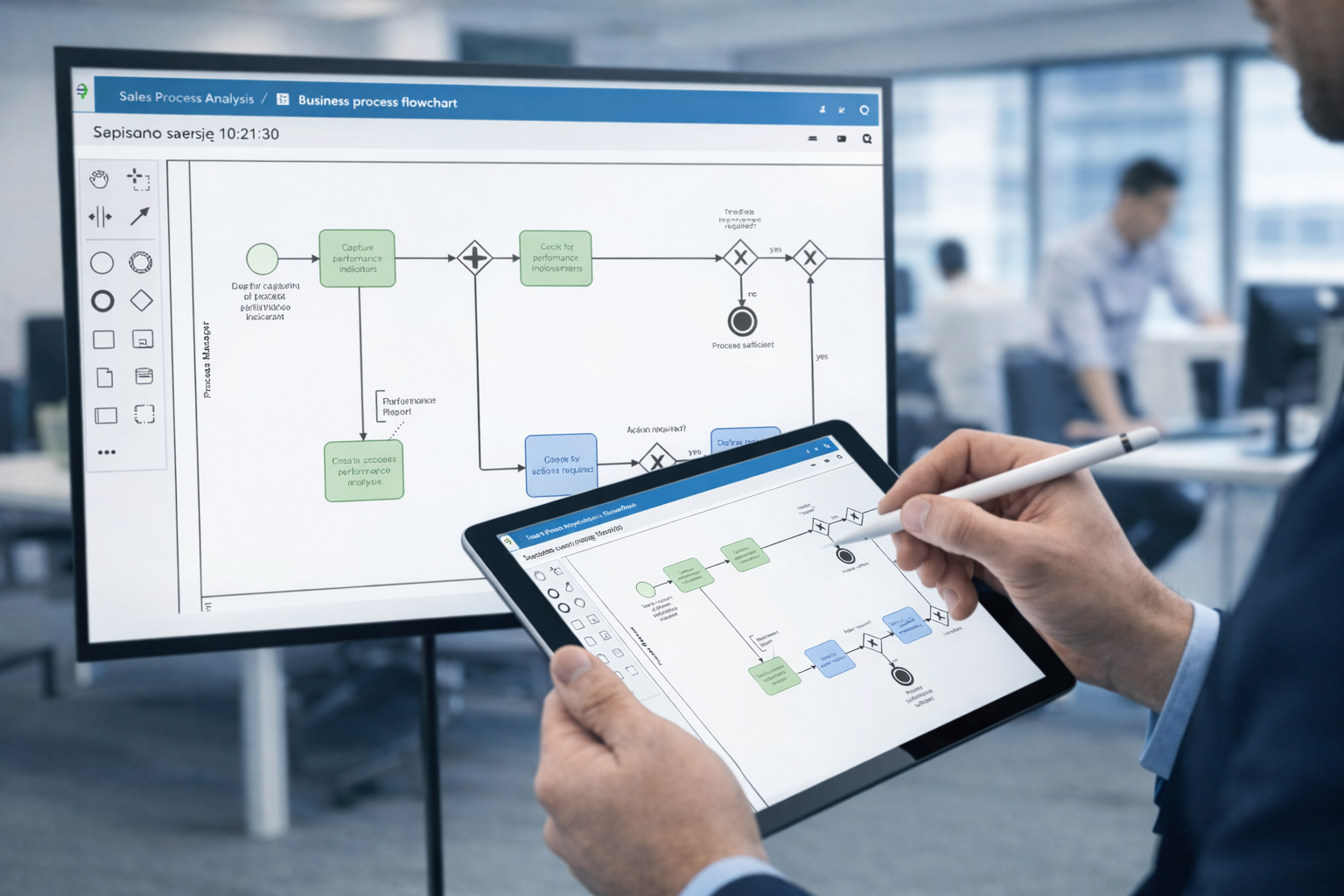
4. Process management with modeling in BPMN 2.0
The module enables comprehensive design, automation, and supervision of business processes using the BPMN 2.0 standard. Thanks to the graphical modeling environment, the organization can accurately replicate any process, then execute and monitor it in real time. The solution supports both business users and IT teams, providing configuration flexibility without the need for programming.
Key components:
-
BPMN 2.0 engine – allows modeling and execution of any processes according to the BPMN 2.0 standard, ensuring transparency of process logic and full control over process execution.
-
Electronic form builder – enables the creation of forms reflecting key data for processes and system resources, with full control over their structure and flow.
-
Integration with the projects module, where a task list in the project is automatically generated based on the BPMN process diagram.
-
Analytics – access to statistics and process analyses. The results are presented in the system interface. The module collects and analyzes data in real time, tracks the progress and execution of individual activities within the designed processes, and on this basis generates overall process statistics, measuring efficiency, intensity, and productivity.
Business functionalities:
-
handling business processes, e.g., document workflows, cases, and e-services.
-
process versioning – eArchive with full operation history,
-
monitoring critical changes with automatic notifications to responsible persons,
-
simulation of process execution with identification of bottlenecks.
The module provides a scalable platform for managing processes and information in the organization, ensuring data consistency, transparency of operations, and full control over process execution.
5. IT specialist outsourcing
We offer IT expert outsourcing in a model tailored to the scale, pace, and specifics of the project. We provide quick access to proven technological skills and a flexible collaboration model that allows effective team augmentation without the need to expand organizational structure.
What do you gain?
Flexibility of engagement through:
-
full-time, part-time, or hourly collaboration,
-
project-based, temporary, or long-term collaboration,
-
ability to change the scope of engagement during project execution.
Team composition flexibility:
-
a single specialist in a chosen technology (Java, Python, PHP, Vue, React, Flutter),
-
several developers in the same or different technologies,
-
a team with mixed skills tailored to project needs,
-
a comprehensive project team: developers, testers, and project manager.
We provide support at every stage of collaboration – from selecting competencies to ongoing coordination of activities. Our goal is to quickly and effectively increase the technological capacity of the client organization.
Outsourcing is a convenient solution for companies that periodically need experienced IT specialists. The service allows you to supplement the project team without costly and time-consuming organizational changes. We have a wide pool of IT experts ready to provide immediate project support. You can specify the required skills yourself or use our consulting to select them. Collaboration with AbiFlow enables rapid and effective enhancement of the technical and knowledge capacity of your team.


6. Fleet management with leasing support
The module enables comprehensive management of the vehicle lifecycle – from acquisition and financing, through operation, to end of use. The solution goes beyond standard fleet systems focused solely on GPS location and telematics, providing full control over documentation, leasing obligations, and the operational status of the fleet.
Key functionalities
-
Leasing contract registry – a central register of contracts with full documentation, accessible to both fleet managers and current vehicle users.
-
Attachments and notes – a repository of documents and comments assigned to vehicles, organizing technical and administrative documentation.
-
Vehicle lifecycle management – monitoring statuses, schedules, and operational events in a single unified environment.
-
Automatic data analysis – the system interprets collected information, updates schedules, manages statuses, and generates intelligent notifications about events requiring action.
-
Open integration architecture – the ability to integrate with existing location and telematics systems without having to abandon current solutions.
-
Centralization of information – full transparency of data on vehicles, documents, and financial obligations in a single tool.
The system was designed based on practical experience from organizations managing large fleets, especially companies in the construction sector. Emphasis on intuitive operation, high data quality, and minimizing unnecessary formalities translates into real efficiency improvements for users and fleet managers.
Business benefits
-
reduction of operational costs and minimization of downtime,
-
increased fleet safety and reliability,
-
improved project planning and resource allocation
-
full control over documentation and leasing obligations,
-
sustainable operational advantage resulting from more efficient use of available equipment.
The module is a scalable and flexible tool supporting organizations in conscious and efficient fleet management.
Book a free consultation and see what we can improve in your company
7. Correspondence Management
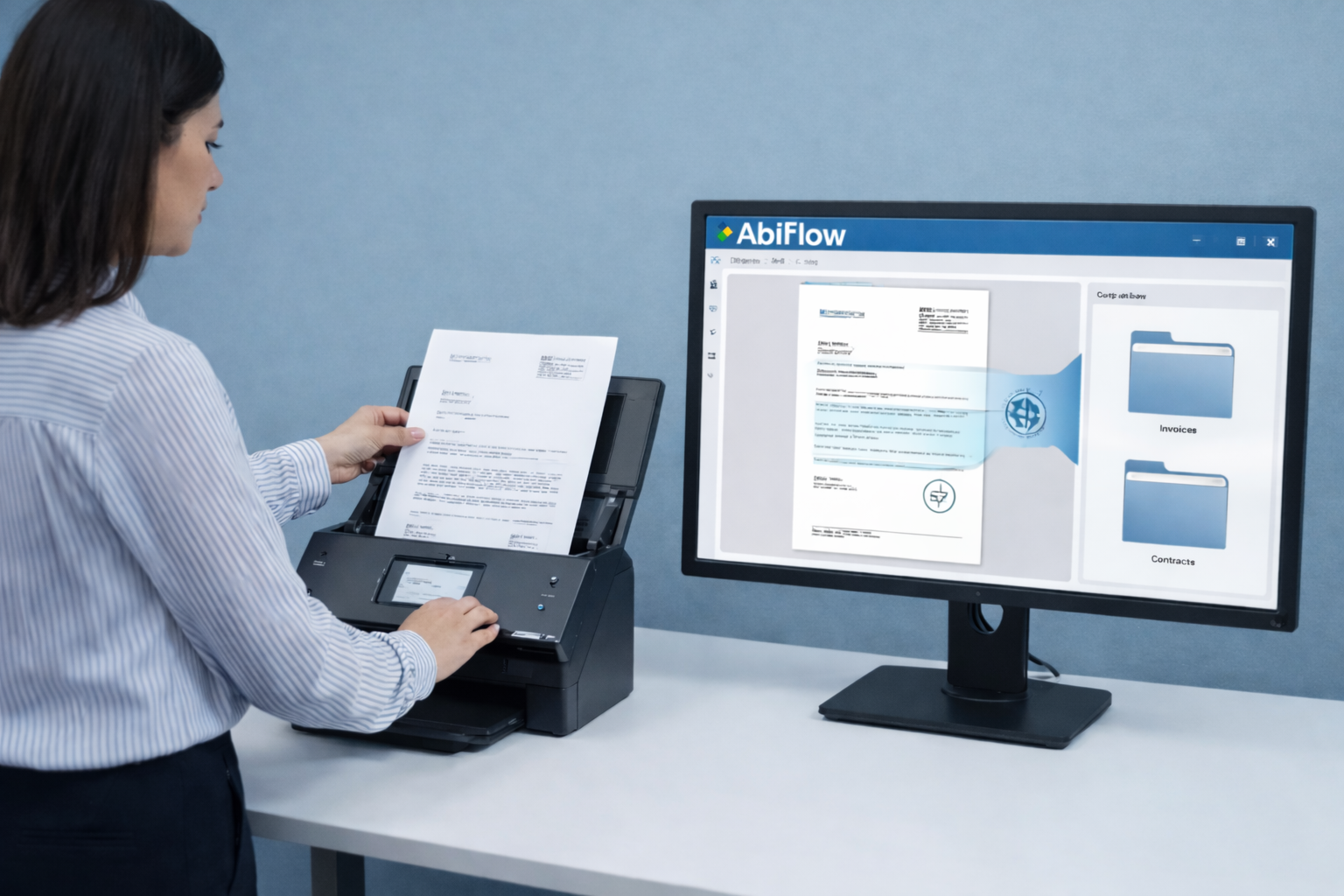
The correspondence log module is an advanced solution supporting comprehensive management of incoming and outgoing correspondence – both electronic and paper – in a single unified environment. The system integrates email clients, document workflows, and the Polish Post e-Sender platform, ensuring full control over registration, classification, distribution, and archiving of correspondence.Correspondence Management
The solution uses OCR, AI/ML, natural language processing, and QR codes, automating key document handling steps and enhancing security and process transparency.
Key functionalities
-
Automatic registration and classification of documents – the system collects correspondence from multiple sources (email, scanned paper documents, electronic forms, e-Deliveries), recognizes content and document type, and suggests categories and the appropriate recipient.
-
Intelligent case assignment and deadline control – AI/ML algorithms analyze document context and organizational structure, automatically assigning cases to the appropriate personnel, generating reminders, and triggering escalations if no response occurs.
-
Advanced email correspondence filtering – integration with email allows automatic detection of important messages based on domains, keywords, and classification history.
-
Digital linking of paper documents – physical documents can be tagged with QR codes, allowing immediate linking to the digital version and full circulation history.
-
Integration with the Polish Post e-Sender – automatic generation of shipment data, label printing, delivery tracking, and secure, encrypted communication with the dispatch system.
-
Central correspondence repository – full history of actions, status monitoring, clear assignment of responsibilities, and a single source of truth for documents.
Business value
The module addresses the increasing complexity of communication in organizations, eliminating information chaos and reducing manual document processing. Process automation accelerates case handling, reduces the risk of errors, and ensures data consistency. Centralization of information increases transparency, improves deadline control, and enhances the security of processed data.
Innovation of the solution
The module’s uniqueness comes from the synergistic combination of AI/ML, OCR, QR codes, postal integration, and the e-Sender platform in a single operational environment. The system not only records correspondence but actively analyzes its content, supports decision-making, monitors case execution, and automates organizational actions. It sets a new standard in correspondence management, combining process automation with a high level of security and control.
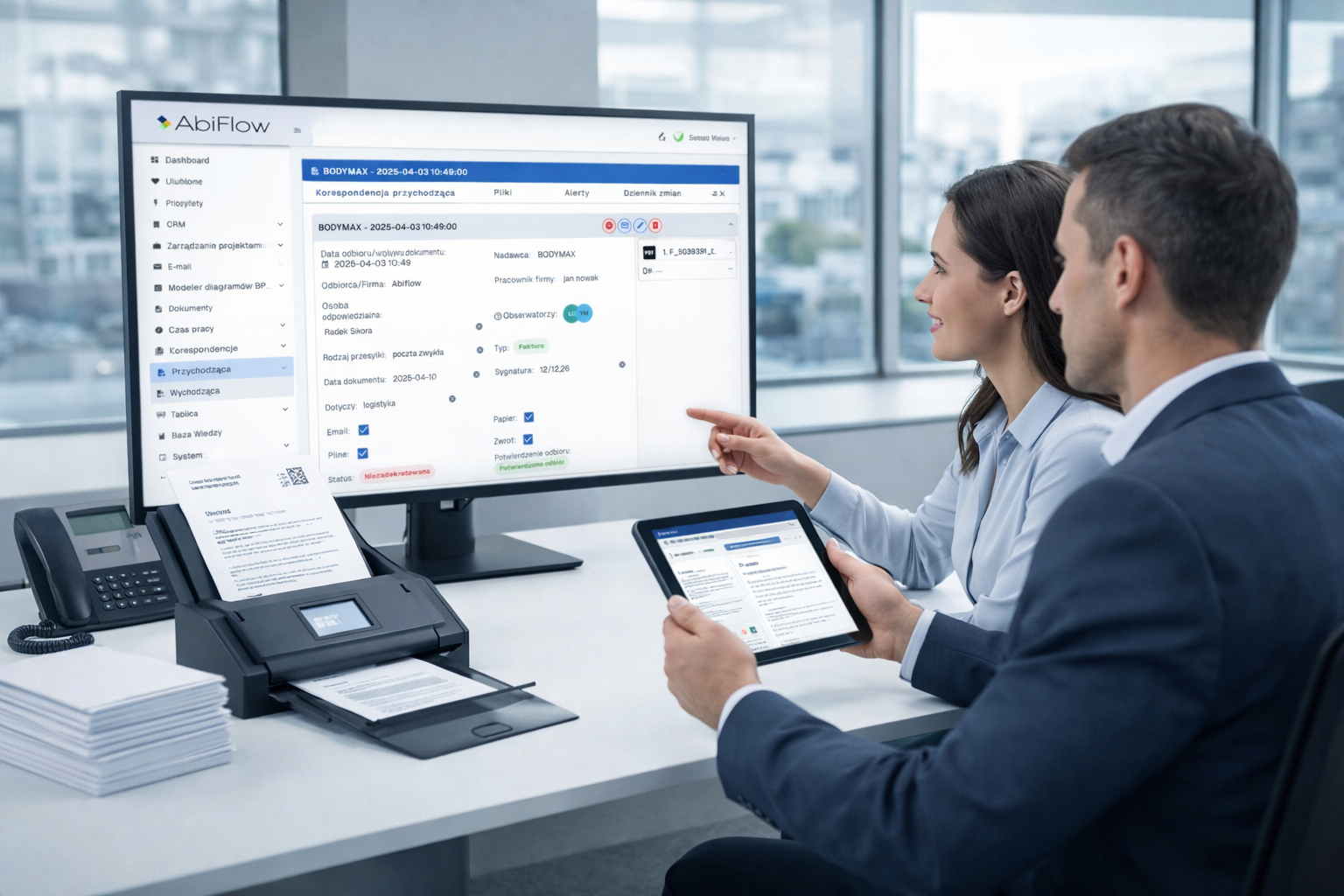
8. Elektroniczny Obieg Dokumentów (System EOD) dla produkcji i magazynu
AbiFlow serves as a central documentation repository where information flow is directly linked to the product, project, and order lifecycle.
The system integrates technical documentation, procurement processes, warehouse management, and production execution in a single unified operational environment, ensuring full data traceability and process automation.
The solution was designed for manufacturing organizations that require strict control of documents, materials, and execution statuses at every stage of the process.
Central document circulation linked to production
The system manages documentation in the context of real business operations – from design, through ordering and production, to warehousing and delivery.
Integrated technical documentation
Each project element or production line may have attached files (e.g., PDF documentation, diagrams, technical drawings). The quick preview feature provides immediate access to documents without downloading.
Digital circulation of purchase requests
The system handles the complete purchase request process with definable statuses, comments, and attachments – both internal and for suppliers. Purchase documents are directly linked to projects and product structure.
Warehouse document automation
Upon delivery confirmation, the system automatically generates internal receipt documents and manages the full set of warehouse documents (PW, RW, PZ, WZ). All operations update warehouse statuses in real-time and are linked to specific projects.
Digital identification of items and documents
Each physical item and document has a unique QR code. Scanning provides immediate access to history, documentation, and operational status, eliminating paper circulation.
Business value
-
full traceability of documents, materials, and production processes,
-
automation of administrative and warehouse operations,
-
ongoing control of project execution and material costs,
-
elimination of paper document circulation,
-
increased transparency, data security, and operational efficiency.
AbiFlow creates a coherent environment for managing production and warehouse documentation and processes, supporting organizations in achieving high operational quality and full control over the product lifecycle.
9. Case and task management in law firms
The AbiFlow module supports comprehensive management of legal cases, tasks, and client relationships in a law firm. The solution allows for creating a clear work structure in the form of a tree of cases, subcases, and tasks for a single client, ensuring full control over task execution and accounting.
The system allows assigning a client-side requester to delegated tasks, increasing transparency of collaboration and facilitating documentation of service execution.
Key functionalities
-
hierarchical structure of cases, subcases, and tasks assigned to a client,
-
real-time recording of activities and working hours,
-
full history of actions and responsibilities for the case,
-
automatic generation of reports and hourly summaries for clients,
-
archiving cases with quick access to current and historical data,
-
analysis of case and client profitability,
-
integration with invoicing systems and notification mechanisms for ongoing cases.
Benefits for law firms
The solution organizes the workflow, ensures a clear division between active and completed cases, and enables quick identification of the history of actions and responsibilities. Managers gain full insight into the team’s working time and can precisely analyze the efficiency and profitability of ongoing cases.
Benefits for clients
The system increases the transparency of cooperation by enabling detailed reporting of completed activities, working time, and the progress of a case. Clients receive clear summaries of the law firm’s activities, which strengthens trust and improves the quality of the business relationship. Clients receive clear summaries of the law firm’s activities, which strengthens trust and improves the quality of the business relationship.
The module is a modern tool supporting efficient management of legal practice, automating administrative processes, and raising the standard of client service in law firms.

See how AbiFlow organizes processes in organizations
– schedule a system demonstration
10. Time Tracking within Project Tasks
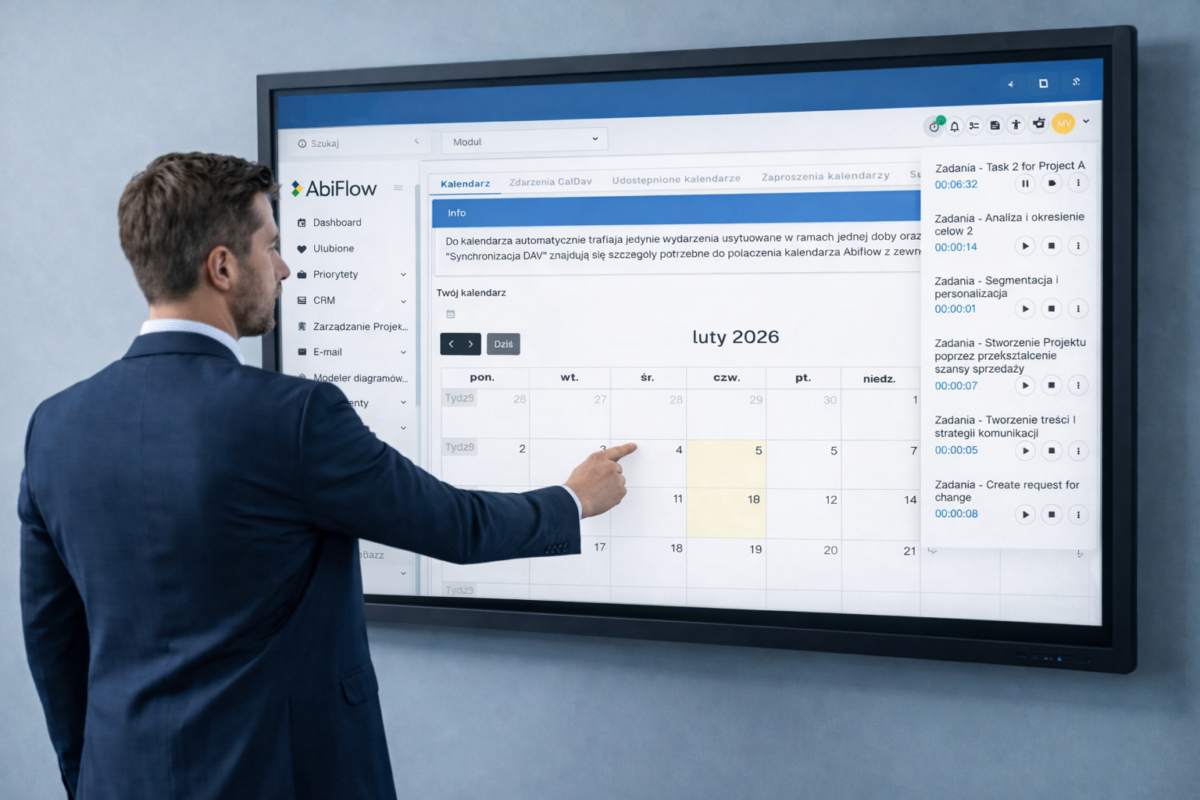
The time tracking functionality in AbiFlow allows precise monitoring of work effort within tasks and projects. The system supports organizations in accurate task accounting, cost optimization, and analysis of team efficiency and project profitability.
The solution includes recording time spent on all project activities within tasks, including meetings, communication, substantive work, and other operational activities related to client service and task execution.
Key Features:
Automatic time tracking
The built-in time measurement mechanism allows starting and stopping tracking with a single click. The system automatically records work time assigned to a specific task, with the possibility of later editing the entry.
Manual time reporting
Users can manually add work time, allowing full recording of activities performed outside the system or in non-standard modes.
Cost and profitability control
The recorded data forms the basis for generating project reports, analyzing service costs, and assessing client and task profitability. The system supports informed budget management and resource planning.
Transparent client billing
Accurate work time recording enables transparent billing based on actual effort, strengthening organizational credibility and business relationship quality.
Organizational Benefits:
-
precise control of operational and project costs,
-
enhanced financial and operational transparency,
-
reliable basis for reporting and settlements,
-
better planning and resource utilization,
-
support in analyzing team work efficiency.
The time tracking module in AbiFlow forms the foundation for conscious project and cost management, enabling organizations to make decisions based on reliable operational data.
11. Project Resource Management
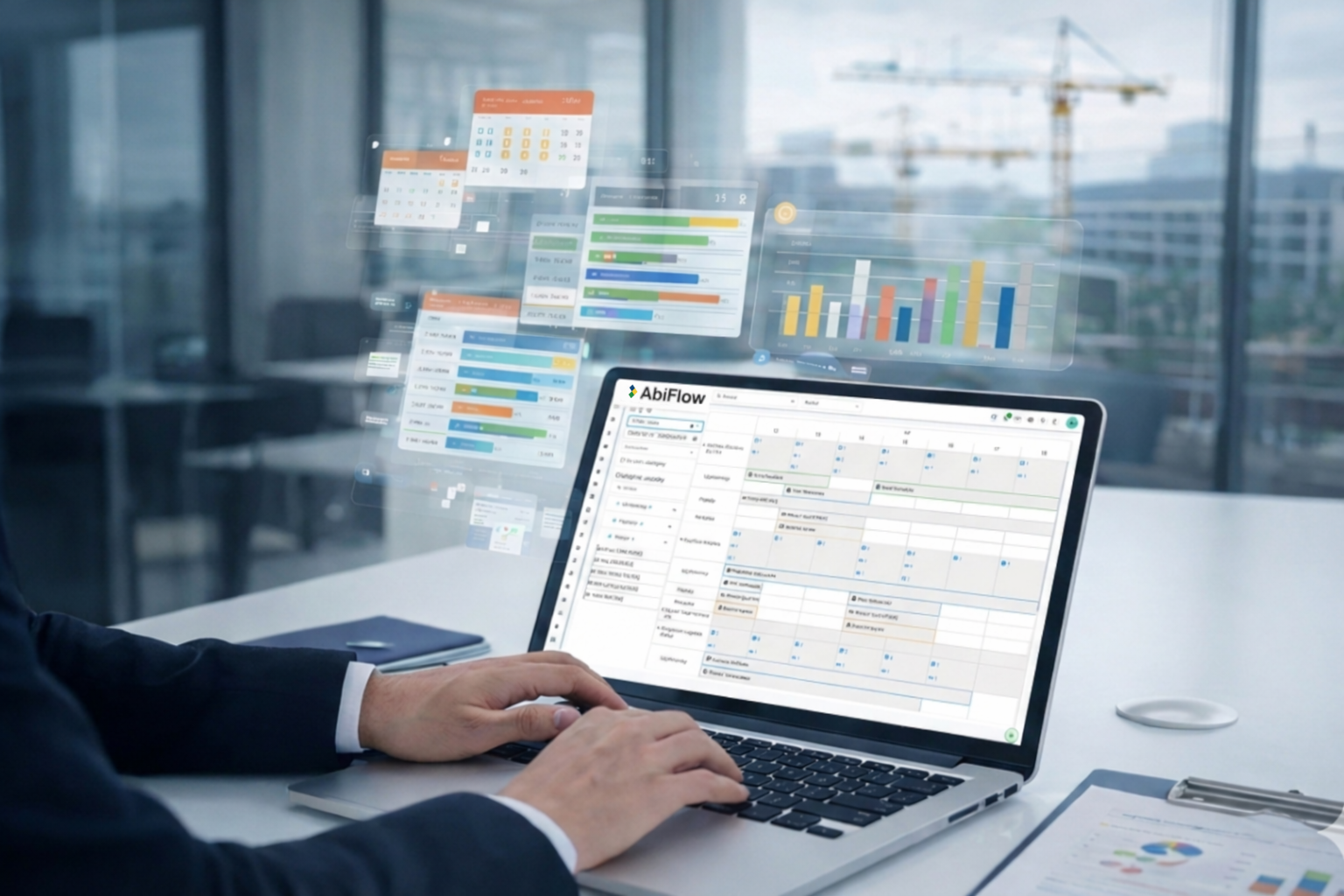
The resource management module enables comprehensive planning, allocation, and accounting of organizational resources in connection with offered and ongoing projects. The solution covers internal employees, subcontractors, vehicles, and key tools and machinery, ensuring transparency of availability, workload, and resource utilization costs.
The system supports long-term planning, operational availability management, and financial accounting of completed work.
Key Features:
Annual resource allocation schedule
The module allows creation of an annual resource utilization plan for planned and ongoing projects. The schedule provides a clear view of resource availability and project demand, supporting strategic planning and preventing overloads.
Weekly operational planning
The system provides a detailed weekly schedule covering employees, subcontractors, vehicles, and key tools and machinery. The plan includes personnel information such as resource availability, planned leave, travel dates, and anticipated allocation changes over the next two weeks.
Project timesheets
Based on the weekly schedule, the system generates monthly timesheets for projects and assigned resources. The records include different types of worked hours, allowing detailed analysis of labor effort and implementation costs.
Project Accounting and Financial Documents
The module allows creating project settlement sheets based on orders and generating settlement protocols that serve as the basis for issuing invoices.
Organizational Benefits:
-
control of resource availability and utilization at both strategic and operational levels,
-
optimization of employee, equipment, and subcontractor allocation,
-
support for project planning based on real availability data,
-
precise accounting of work and project costs,
-
increased transparency of planning and financial processes.
The AbiFlow resource management module serves as a central planning tool supporting efficient utilization of organizational potential and informed project execution management.
12. Product Structure Management
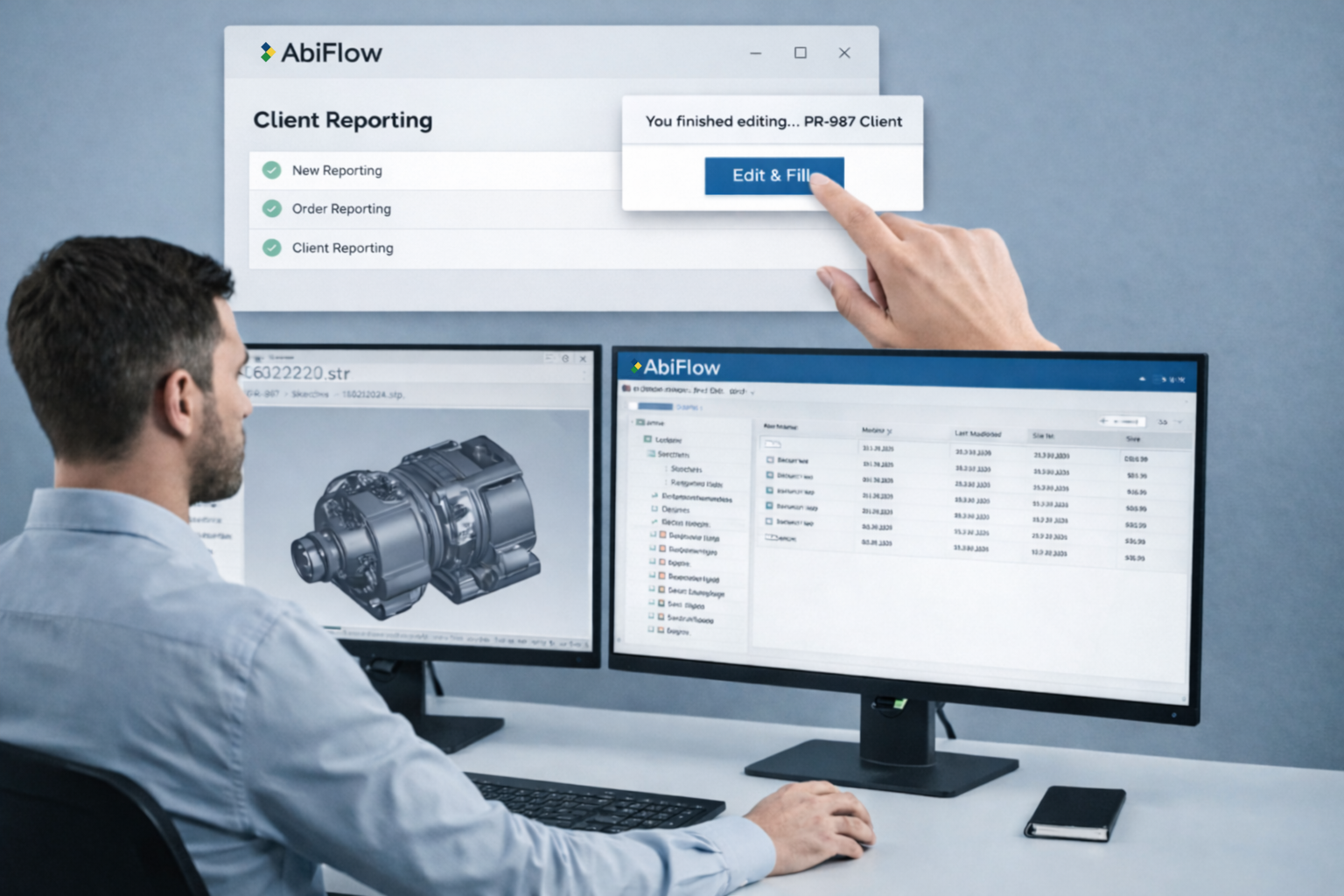
The system supports production planning, execution, and control through tight linkage of documents with manufacturing technology.
Product Structure Modeling (BOM)
Ability to define multi-level product structures, manage project statuses, and set execution priorities.
Defining Technology and Resource Planning
The system maps the production path of elements, including parallel operations, planned lead times, and deadlines.
Production Execution Monitoring
Recording work progress in real time, comparing actual time with planned, and maintaining a full history of production operations.
Interactive Workstation Handling
Production operators can receive and transfer elements between departments by scanning QR codes, which automatically updates their status and location.
Let’s discuss your processes – we will prepare a tailor-made solution proposal
13. Production Execution
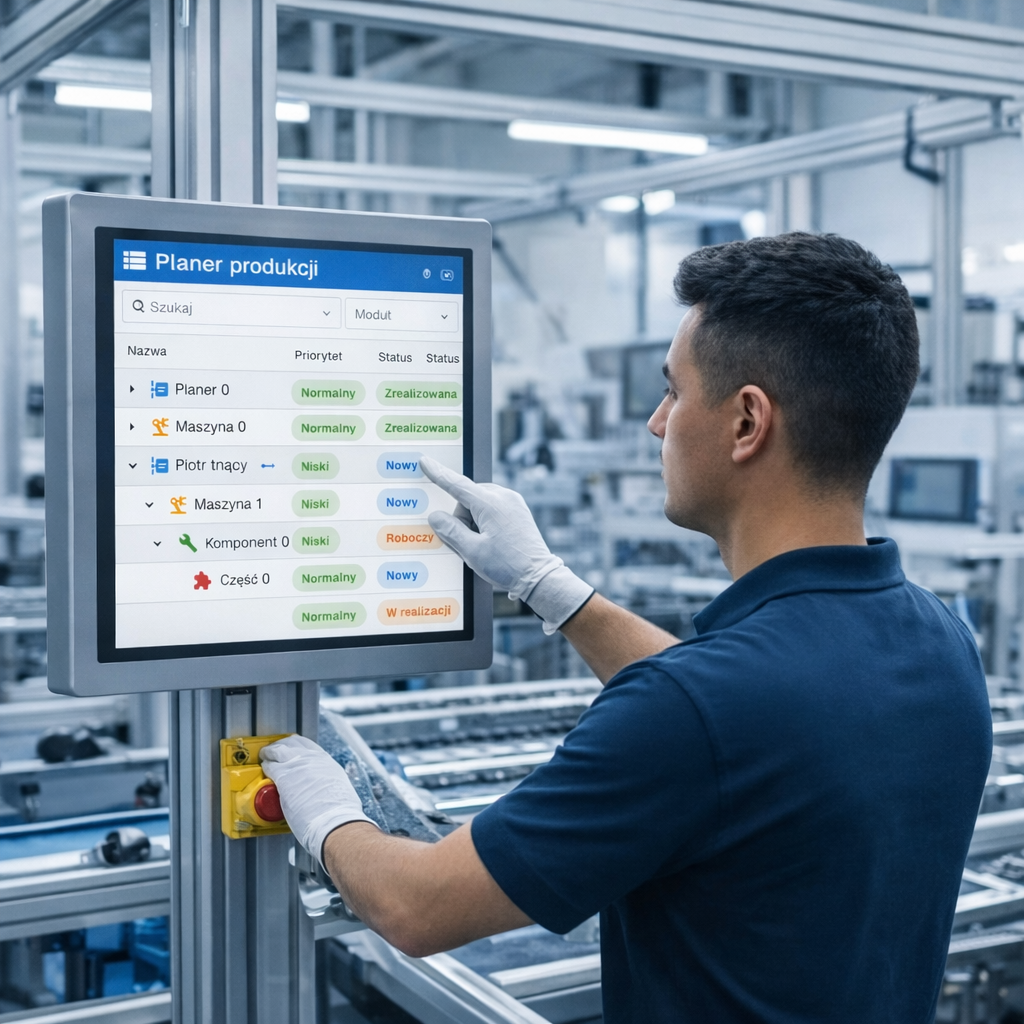
The Production Execution module is a tool for operational management of shop floor activities, providing real-time control over process progress, item statuses, and resource utilization. The system operates based on a permissions model aligned with the organizational structure and department specifics, enabling precise responsibility and information access management.
The solution supports smooth flow of elements between production stages, ensuring full operation traceability and a real-time view of task execution.
Key Features:
Real-Time Progress Monitoring
The system records production history at the level of individual operations and departments, enabling real-time analysis against planned values. This allows immediate detection of deviations and effective schedule management.
Interactive Workstation Handling
Production operators manage element flow using QR scanners. Receiving a component at a workstation or transferring it to the next stage is done via a simple scan, minimizing manual errors and accelerating work.
Automatic Item Location
The system automatically updates the "current location" parameter when a component is received at a department. This enables instant identification of each component’s position in the production process.
Organizational Benefits:
-
full transparency of production execution and item statuses,
-
real-time monitoring of operational efficiency and work time,
-
reduction of errors in component flow,
-
instant identification of item locations on the shop floor,
-
improved coordination of work between departments.
The Production Execution module is a key component of the AbiFlow production management environment, supporting organizations in enhancing operational efficiency, process control, and quality of order fulfillment.

14. Warehouse Management and Inventory Oversight
Supply and Inventory Control
The AbiFlow module supports comprehensive warehouse management, providing full control over material flows, inventory levels, and project execution costs. The solution integrates procurement, inventory records, and warehouse operations in a single environment, enabling real-time resource supervision and full traceability of warehouse operations.
The system is designed for organizations requiring precise inventory control, transparency of material flows, and tight integration of warehouse management with ongoing projects.
Key Features:
Supply and Project Cost Control
Each order and its items can be assigned to a specific project, enabling accurate material cost accounting and real-time monitoring of resource usage..
Flexible Management of Purchase Items
The system allows using a product catalog or entering custom items, supporting partial deliveries and gradual receipt of materials into the warehouse.
Advanced Warehouse Records
The multi-level product catalog structure allows creating a category tree and assigning detailed attributes, such as weight, dimensions, or EAN code. Issue operations can be performed according to FIFO rules or linked to a specific project.
Full Material Traceability
The system archives the full history of inventory changes for each item, ensuring operational transparency and enabling detailed analysis of material flows.
Organizational Benefits:
-
real-time control of inventory levels and material flows,
-
transparent accounting of material costs in projects,
-
reduction of operational errors and improved data quality,
-
full history of warehouse operations and increased process transparency,
-
improved planning of procurement and resource utilization.
The module is a scalable tool supporting efficient warehouse management, ensuring data consistency, operational security, and high control over the organization’s material management.
15. Help Desk for Warranty Orders and CRM Contact Center
Customer Problem and Needs
Many companies face the challenge of fragmented customer communication channels and lack a central system for tracking requests. Manual handling of emails, calls, and social media inquiries leads to delays, errors, and ultimately decreased customer satisfaction. Companies need a tool that automates repetitive tasks and provides full control over the support process.
Solution
The HelpDesk module is a modern solution combining ticket handling processes with multiple input channels. It centralizes management of all inquiries on a single platform, improving team collaboration and eliminating the need for manual data entry.
Key functionalities
• Omnichannel: Integration of multiple channels allowing registration of requests from various sources, such as email, phone, SMS, chat, social media, and external portals.
• Ticket Management: The history of requests is stored per client or category, enabling quick review of prior activity.
• Automation and AI: Use of chatbots/voicebots to provide predefined responses.
• Knowledge Base: Integrated repository for instructions, procedures, and descriptions, facilitating quick responses to recurring questions.
• Notifications and Delegation: Automatic generation of system notifications for newly assigned tasks and monitoring of critical deadlines.
Business Benefits
• Increased Customer Satisfaction: Faster and more personalized service thanks to centralized data and task automation.
• Operational Optimization: Reduced response and handling times while minimizing risk of delays.
• Control and Reporting: Ability to generate reports, facilitating strategic decisions based on hard data.
Expertise and Support
The solution is implemented by a team of specialists, ensuring compliance with IT service management best practices. Continuous technical support and regular platform updates are also provided.